
Checked
Refrigerant charge measured
Low charge turned up on 55 of the 100 Tucson repair calls in Rite Way's June 2026 audit. A low reading means only one thing: a leak, and March is a kinder month to go looking for one than July.
I come out twice a year, in March and October, check the parts that wear out fastest in Tucson heat, and leave a written finding sheet each time.
Two visits a year, one before the heat and one before the cold.
The spring visit lands by the end of March, ahead of the first 100 degree day. In 2026 that day came on March 19, the earliest on record, and the summer had 70 days at 100 F or more. The fall visit comes in October, after the monsoon has left its dust in the outdoor coil and before the first night you reach for the heat.
Low charge turned up on 55 of the 100 Tucson repair calls in Rite Way's June 2026 audit. A low reading means only one thing: a leak, and March is a kinder month to go looking for one than July.
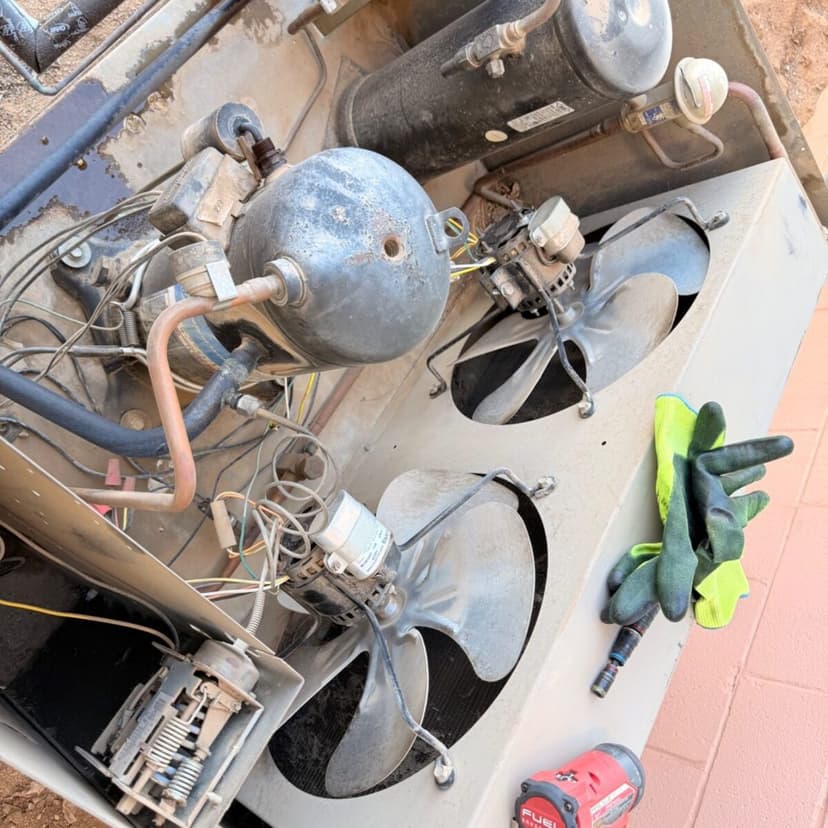
The capacitor showed up in half of those calls and the contactor in 11 of them. A weak one gets written on the sheet while it still starts the unit.
The coil is where the heat from your house leaves. Under a layer of dust it can't shed that heat, so the system runs longer for the same cooling and the compressor runs hotter.
All summer the system pulls water out of the air. A clogged line, 23 of the 100 calls, trips the float switch or turns into a stain on a ceiling.
A clean one to start the season, and the size written down so you can buy the months in between.
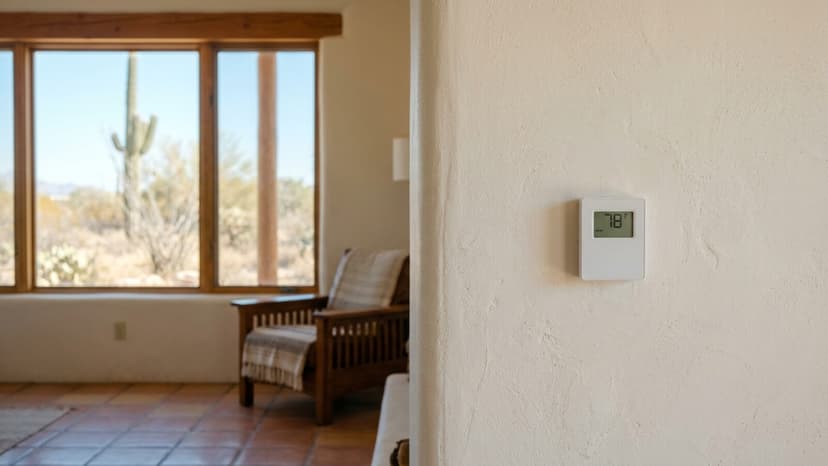
Settings, wiring, and whether the reading matches the room. A thermostat that reads high keeps the system running long after the house is cool.
Tucson homes heat with a heat pump or a gas furnace, and this is the visit that catches a dead heat strip or a tired igniter before the first cold night. August 2026 was the fifth hottest on record here, with two days at 110, so the heat side has had a long rest.
The system runs in heating mode long enough to show it warms the house: supply air temperature, the reversing valve on a heat pump, the burner on a furnace.
A furnace igniter or a heat pump's backup strips sit unused from spring to December. Tested in October, a cracked igniter turns up on the findings sheet instead of on a cold January night.
Monsoon dust ends up in the filter and on the blower wheel. Weak airflow in winter shows up as cold rooms at the far end of the house.
Limit switches, and on a gas furnace the flame sensor and the controls that shut off the gas when something is wrong.
Every plan visit ends with my findings in writing before I propose any further work.
Most of this takes a filter, a garden hose and knowing where one switch is.
Change the filter, then change it every month through the monsoon, June 15 to September 30. In 2026 it started on June 14, the earliest on record, and dropped 5.76 inches. Monsoon dust clogs a filter far faster than the rest of the year.
Make sure the condensate drain runs clear. Monsoon humidity is what overloads it.
Find the outdoor disconnect, the switch box on the wall beside the outdoor unit, so you can reach it in a hurry.
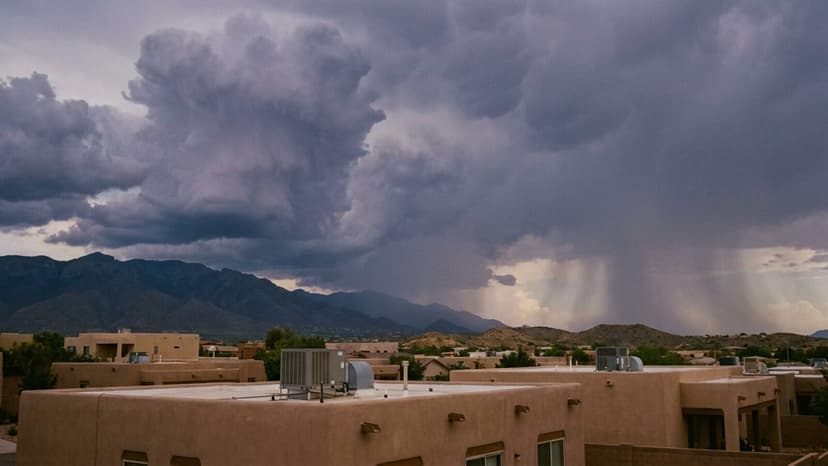
Shut the system off at the thermostat when the dust wall arrives, and leave it off until the dust settles.
Keep it off through the lightning too. A strike nearby can send a surge into a running unit.
Change the filter, if needed.
With the power off at the disconnect, rinse the outdoor fins with a garden hose at gentle pressure. A pressure washer and high pressure damages the aluminum fins, so leave it in the garage.
Turn the system back on and check that water is coming out of the drain line while it runs.
Book the fall visit.
Tucson Electric Power pays you back for coil cleaning and a refrigerant recharge on an existing system: $40 for the outdoor coil, $40 for the indoor coil and $80 for a recharge, one of each per calendar year. The work has to be done by an Arizona-licensed HVAC contractor by December 31, 2026. You apply within 90 days with an itemised invoice, and TEP pays in 6 to 8 weeks while the program's funds last.
My invoice from a plan visit lists each coil cleaned and any refrigerant added, so you can file the 2026 application form straight from it.
There is no federal tax credit for systems installed in 2026.
In March: the refrigerant charge, the capacitor and contactor, the outdoor coil, the condensate line, the filter and the thermostat. In October: the heat side, the igniter or heat strips, the airflow and the safety controls. Each item is written out under the spring visit and the fall visit.
March and October. March gets ahead of the first 100 degree day, which came on March 19 in 2026, the earliest on record. October comes after the monsoon has finished and before you need heat.
$195 to $299 a year for both visits. Each visit ends with my findings in writing before I suggest any other work. *price ranges due to system configurations
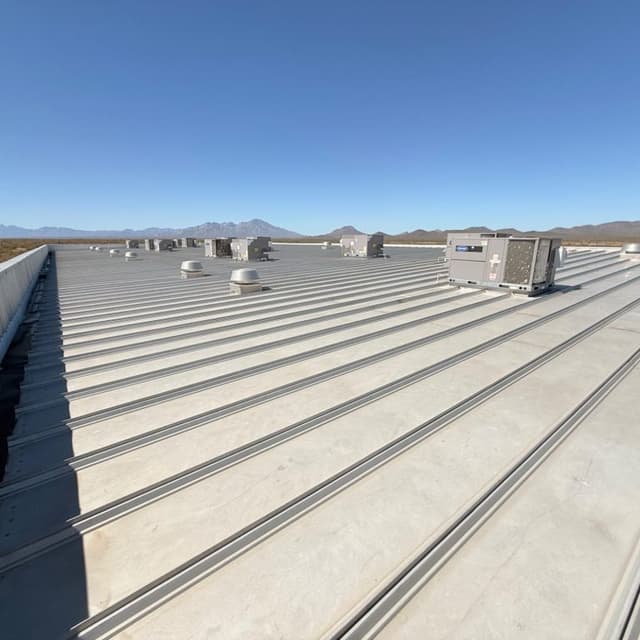
Small offices and shops with rooftop or package units get the same two visits on the same schedule. See commercial service.
The filter and the monsoon checklist are yours. Measuring the refrigerant charge, testing the electrical parts and rinsing the coil with the panel open are what the visits are for.
Send me a request, or call 520-820-5422 and ask which week works for the spring or fall visit.